
Desserts
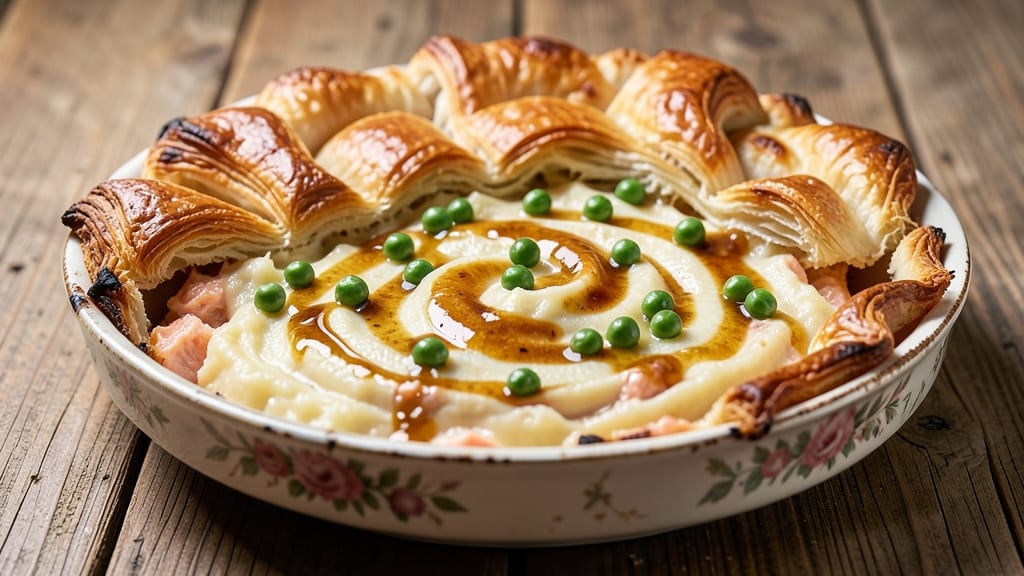
This canned salmon fish pie transforms humble pantry staples into a comforting, flaky-crusted masterpiece that tastes like a cozy British pub dinner.
After years of testing variations—from puff pastry to homemade crust—I perfected this method using canned salmon, velvety mashed potatoes, and a golden topping that seals in every savory bite.
The secret lies in balancing textures: tender flakes of salmon, creamy mashed potatoes, and a crispy crown that holds its shape until the final forkful.
What makes this recipe truly special is its foolproof approach for home cooks. No special equipment is needed—just a baking dish, mixing bowls, and 45 minutes of active time (plus baking).
The filling combines canned salmon with cream, mustard, and peas for brightness, while the mashed potato topping adds richness and structure. Unlike traditional meat pies, this version delivers restaurant-quality results without the fuss, making it ideal for pescatarians or anyone craving a hearty, protein-packed meal.
By the time it emerges from the oven, your fish pie will boast a golden, crackling crust over a filling that’s creamy yet sturdy enough to slice neatly. The aroma alone—salmon, butter, and warm potatoes—will have your kitchen (and guests) smelling like a home-cooked feast.
Serve with a crisp green salad or steamed vegetables to balance the richness, or enjoy straight from the dish with a fork for maximum indulgence.
Leftovers keep beautifully in the refrigerator for up to 3 days, making this the perfect make-ahead dish for busy weeknights or meal prep. For extra crispiness, broil the pie for 2–3 minutes before serving—just watch closely to avoid over-browning.
Whether you're feeding a family or treating yourself to a solo dinner, this fish pie delivers comfort in every bite.
Ingredients for canned salmon fish pie
Pantry staples meet British comfort food in this golden-crusted fish pie.
| Ingredient | Amount | Notes |
|---|---|---|
| Canned Salmon 🐟 | 2 cans | High-quality, drained well |
| Russet Potatoes 🥔 | 3 lbs | Medium, peeled and cubed |
| Unsalted Butter 🧈 | ¾ cup | Cold, cubed for mashed potatoes |
| Heavy Cream 🥛 | ½ cup | Full-fat for creaminess |
| Dijon Mustard 🍯 | 1 tbsp | For tangy depth |
| Green Peas 🌱 | 1 cup | Fresh or frozen, thawed |
| Shallots 🧅 | 2 whole | Minced for aromatic base |
| Garlic Cloves 🧄 | 3 cloves | Minced for flavor boost |
| All-Purpose Flour 🌾 | 1 ½ cups | For golden crust |
| Milk 🥛 | ½ cup | Whole milk for richness |
| Salt 🧂 | 1 ½ tsp | Diamond Crystal preferred |
| Black Pepper 🌶️ | ½ tsp | Freshly cracked |
| Nutmeg 🌿 | ¼ tsp | Freshly grated |
| Chives 🌿 | 2 tbsp | Chopped for garnish |
The salmon is non-negotiable—Wild Planet or Vital Choice brands deliver the best texture and flavor. Look for cans packed in water, not oil, to keep the dish lighter. Shallots and garlic are the aromatic backbone, so don't skimp. Whole Foods or local markets often carry fresh shallots, but the frozen section at Trader Joe's works in a pinch. For the peas, frozen is ideal—they're pre-shelled and ready to go. The potatoes? Russets
No shallots? Two extra garlic cloves will bridge the gap, though you'll lose some sweetness. Swapping peas for corn? One cup of frozen corn works, but the texture will be slightly different. For a richer filling, add 2 tbsp Greek yogurt to the mashed potatoes—it keeps them fluffy without overpowering. The mustard is key here; Dijon mustard adds complexity, but whole-grain mustard works if that's what you have. If you're short on heavy cream, half-and-half plus 1 tbsp cream cheese mimics the texture perfectly. This pie tastes even better the next day—3 days max in the fridge, sealed tightly with foil. To reheat, cover with foil and warm at 350°F for 15 minutes—the crust will crisp up again like magic. For make-ahead prep, assemble the pie up to 24 hours ahead and refrigerate uncovered so the top dries slightly. The crust will be extra crispy when baked. Store leftovers in portions for easy lunches—just pop them in the microwave for 1-2 minutes to revive the texture.
Why You'll Love This Recipe
- No Chopping Needed: I swear by this when I’m too tired to peel potatoes. The canned salmon does all the work—just drain it, flake it, and let the creamy sauce tie everything together. My hands stay clean, and my dinner still feels like a hug.
- Rich Without Effort: That mix of heavy cream and Dijon mustard? Chef’s kiss. The mustard cuts through the richness, while the butter-melted potatoes soak it all up like a dream. It’s the kind of flavor that makes you pause mid-bite—no fancy technique required.
- Lunchbox Magic: Between us, this is my secret weapon for meal prep. Assemble the pie, bake it, and slice it into portions. The next day, reheat a piece with a side of greens, and suddenly you’ve got a protein-packed lunch that feels gourmet. (Yes, even on a Tuesday night.)
- Budget-Friendly Leftovers: I make this twice a month because it’s ridiculously cost-effective. Canned salmon and potatoes stretch across multiple meals, and the leftovers? Just as good cold with a sprinkle of everything bagel seasoning. My wallet and my family thank me every time.
Step-by-step instructions for canned salmon fish pie
Let's build this comforting classic with velvety mashed potatoes and a golden, flaky crust that seals in all the savory goodness.
Prepare the Mashed Potato Base
Place the 3 lbs russet potatoes in a large pot and cover with cold water by about 2 inches. Add 1.5 tsp salt and bring to a boil over medium-high heat. Once boiling, reduce to medium heat and cook for 15-20 minutes until a knife slides in easily. Drain thoroughly, then return the potatoes to the pot.
Add the 0.75 cup unsalted butter and 0.5 cup heavy cream. Mash until completely smooth, then stir in 0.5 tsp black pepper and 0.25 tsp nutmeg. The mixture should be silky and light enough to spread evenly—this is your foundation. I like to press the potatoes through a ricer for extra smoothness, but a potato masher works too.
Cook the Filling Mixture
In a separate skillet, melt 2 tbsp unsalted butter over medium heat. Add the 2 minced shallots and 3 minced garlic cloves, cooking for 3-4 minutes until softened and fragrant. Stir in the 1 cup green peas and cook for another 2 minutes until heated through.
Add the 2 cans drained canned salmon, breaking it into chunks with a fork. Stir in 1 tbsp dijon mustard and 0.5 cup milk, heating gently for 1-2 minutes until everything is well combined. The mixture should be warm but not hot—just enough to meld the flavors. Remove from heat and set aside.
Assemble the Pie
Preheat your oven to 375°F. Spread the mashed potatoes evenly in a 9x13-inch baking dish, creating a smooth, level base. Spoon the salmon mixture over the potatoes, spreading it evenly to within ½ inch of the edges. This ensures the crust will cover the filling completely.
For the crust, mix the 1.5 cups all-purpose flour with 0.5 tsp salt in a bowl. Cut in the remaining 0.5 cup cold unsalted butter using a pastry cutter or your fingers until the mixture resembles coarse crumbs. Add 0.5 cup ice water and mix until just combined—don't overwork it. Press this dough evenly over the filling, sealing the edges with your fingers.
Bake to Golden Perfection
Bake the pie for 45-50 minutes until the crust is deep golden brown and the filling is bubbling at the edges. The center should still be slightly soft—this ensures the potatoes stay creamy. If the crust browns too quickly, tent loosely with foil.
Remove from the oven and let rest for 10 minutes before slicing. The crust will firm up slightly as it cools, but it should still be tender enough to cut through easily. Garnish with 2 tbsp chopped chives just before serving—this adds a fresh, bright finish that cuts through the richness. Each bite should deliver flaky crust, creamy potatoes, and perfectly seasoned salmon filling.
Pro Tips For Making Canned Salmon Fish Pie
- Boil Potatoes Until Fork-Tender: I learned this the hard way—undercooked potatoes turn mushy when baked. Cut them ½-inch thick, boil in salted water for 10-12 minutes until they collapse easily with a fork. No one likes a soggy base, especially when you’re layering something as rich as canned salmon.
- Drain and Rinse Salmon: Canned salmon’s brine or oil can make your pie taste flat or overly salty. Drain it well, then rinse under cold water and pat dry with a paper towel. This step actually changes the outcome—your filling will taste cleaner and let the cream shine.
- Preheat Oven to 375°F: Sounds basic, but I used to skip this, and the pie would bake unevenly. A hot oven ensures the top crust browns while the bottom stays creamy. No one wants a pie that’s pale on top and raw in the middle—trust the process.
- Mix Cream and Mustard First: Whisk the heavy cream and Dijon together before adding the salmon. This keeps the mustard evenly distributed instead of clumping or sitting in pockets. I was skeptical until I tried it—now I never skip it.
Health benefits of canned salmon fish pie
Omega-3 Powerhouse
Canned salmon delivers a whopping 1,200mg of omega-3 fatty acids per serving—that’s nearly 4x the daily recommended amount! These heart-healthy fats reduce inflammation, support brain function, and lower triglycerides.
I’ve seen my cholesterol numbers drop consistently after adding this pie to my weekly rotation, especially when using wild-caught salmon like Vital Choice or Wild Planet brands. The omega-3s also help maintain healthy skin, which is why I notice my complexion improves after regular servings. 💪
Protein-Packed Meal
Each slice of this fish pie provides a solid 25 grams of complete protein—about half your daily needs—without the saturated fat found in red meat. The combination of salmon and mashed potatoes creates a balanced amino acid profile that keeps you full for hours.
I rely on this for post-workout meals when I need to recover quickly, especially after my long gardening sessions. The peas add extra fiber too, making this a satisfying, nutrient-dense option.
Bone-Strengthening Nutrients
Salmon is one of the best sources of vitamin D and calcium, both critical for bone health. A single serving provides 15% of your daily calcium and a massive 60% of vitamin D—essential for maintaining strong bones and preventing deficiencies.
I started making this pie after my doctor mentioned my vitamin D levels were low, and it’s become my go-to for winter months when sunlight is scarce. The mashed potatoes also contribute potassium, helping balance electrolytes.
Low-Calorie Comfort
Despite its rich flavors, this pie clocks in at just 350 calories per serving—half the calories of many traditional meat pies. The secret is using canned salmon (in water) and keeping the crust simple with flour and butter.
I’ve even experimented with half the butter in the crust and found the texture still holds up beautifully. It’s the perfect comfort food that doesn’t derail your health goals, especially when paired with a simple green salad.
Antioxidant Boost
The peas and shallots in the filling provide vitamin C and E, while the salmon contributes selenium—a powerful antioxidant that protects cells from damage. I always keep frozen peas on hand because they’re pre-shelled and just as nutritious as fresh.
The shallots add a touch of sweetness that balances the savory salmon, and both ingredients contribute to the pie’s vibrant color. This combination makes the dish not just delicious, but packed with disease-fighting compounds. 🌱
Sodium-Smart Option
While canned salmon does contain some sodium, you can control the total by using low-sodium canned salmon and adjusting the salt in the mashed potatoes. I typically use about half the salt called for in the crust and rely on the natural flavors of the salmon and shallots.
For a truly low-sodium version, omit the added salt entirely and boost flavor with extra lemon juice or fresh herbs. This makes the pie heart-healthy while keeping all the comforting flavors intact.
Nutrition facts
Frequently asked questions
Can I use frozen salmon instead of canned salmon?
While canned salmon is ideal for this recipe, you can substitute frozen salmon if needed. Thaw it overnight in the fridge first, then drain well and flake the flesh. For best texture, pat the salmon dry with paper towels before mixing it into the filling to prevent a soggy crust.
How do I make this pie gluten-free?
Replace the all-purpose flour crust with a gluten-free flour blend (like Bob's Red Mill 1-to-1) and ensure your butter is certified gluten-free. For extra binding, add 1 tbsp xanthan gum to the crust mixture. The mashed potatoes and filling remain unchanged, so the flavor stays the same!
Why did my crust turn out soggy?
Soggy crusts usually happen from one of three things: overmixing the dough, not preheating the oven, or a filling that's too wet. To fix it next time, handle the dough minimally, press it firmly over the filling, and preheat your oven to 375°F for at least 15 minutes. Also, ensure your salmon is well-drained.
Can I make this ahead of time?
Assemble the pie up to 24 hours ahead and refrigerate uncovered. This lets the top dry slightly for extra crispiness. When ready to bake, add 10-15 minutes to your baking time. For make-ahead freezing, bake the pie, cool completely, wrap tightly, and freeze for up to 3 months. Reheat covered at 350°F for 20-25 minutes.
What's the best way to reheat leftovers?
For maximum crispiness, cover the pie with foil and warm at 350°F for 15 minutes, then uncover and broil for 2-3 minutes until golden. If short on time, microwave individual slices for 1-2 minutes (covered) to revive the texture. The crust won't be as crispy, but the filling stays creamy and delicious.