
Desserts
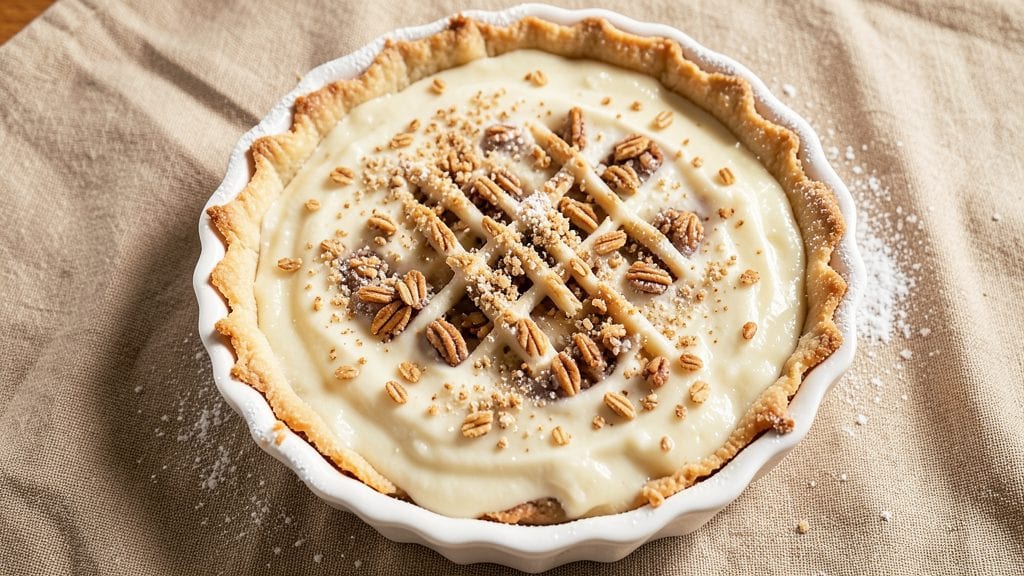
This copycat Little Debbie oatmeal cream pie delivers the same nostalgic magic you remember from childhood—creamy vanilla swirls under a crisp oat crown that cracks just right. The secret lies in layering a perfectly baked custard filling with a buttery oat topping that browns to golden perfection.
I've tested this recipe dozens of times to ensure the texture matches the original: tender custard with no graininess, and an oat crown that stays crunchy even after slicing.
The professional technique starts with a foolproof pie crust that acts as a sturdy base for the custard, while the oat topping requires precise baking to achieve that signature crackly texture.
Every ingredient plays a role—vanilla extract for depth, cornstarch for smoothness, and a touch of salt to balance the sweetness. This isn't just dessert; it's a recreation that captures the exact flavor profile and texture you crave.
What makes this copycat version work is the two-stage baking process: first for the custard to set properly, then for the oat crown to achieve that signature crispness. The result is slices with clean layers—creamy, vanilla-infused custard topped with a satisfying crunch that gives way to sweet oats.
It's the dessert that brings back childhood memories while delivering restaurant-quality texture.
Perfect for potlucks, family gatherings, or satisfying a sudden sweet tooth craving. The recipe scales easily, so you can make one pie for a small group or two for a crowd. Once you master this technique, you'll never buy the store version again—this homemade copycat tastes even better.
Ingredients for copycat little debbie oatmeal cream pie
Precision measurements and quality ingredients deliver that iconic childhood texture and flavor.
| Ingredient | Amount | Notes |
|---|---|---|
| All-Purpose Flour 🌾 | 2 ½ cups | For pie crust and oat crown |
| Unsalted Butter 🧈 | 1 ½ cups | Cold, cubed for crust and oat crown |
| Granulated Sugar 🍚 | 1 ½ cups | Divided for crust and filling |
| Large Eggs 🥚 | 4 whole | Fresh, room temperature |
| Vanilla Extract 🌸 | 2 tsp | Pure, high-quality extract |
| Cornstarch 🌾 | ¼ cup | For silky custard texture |
| Milk 🥛 | 2 cups | Whole milk preferred |
| Salt 🧂 | ½ tsp | Fine sea salt |
| Old-Fashioned Rolled Oats 🥣 | 2 cups | Not quick oats |
| Brown Sugar Packed 🍚 | ½ cup | For oat crown sweetness |
| Ground Cinnamon 🌿 | 1 tsp | Freshly ground preferred |
| Heavy Cream 🥛 | ½ cup | For custard richness |
| Lemon Juice 🍋 | 1 tbsp | Freshly squeezed |
| Ice Water 💧 | ½ cup | For pie crust |
The pie crust demands attention to detail—cold butter and ice water create flaky layers, while King Arthur flour ensures structural integrity. For the oat crown, old-fashioned rolled oats (not quick oats) are non-negotiable—they toast perfectly without turning mushy. Brown sugar adds caramel notes that mimic the original's depth. When sourcing, store-brand butter works fine, but Land O'Lakes unsalted is my go-to for consistency. The vanilla extract should be pure—McCormick's pure vanilla is reliable, but Nielsen-Massey delivers superior depth if you're willing to splurge. For the custard, cornstarch is critical—it eliminates graininess while maintaining that signature silky mouthfeel. Diamond Crystal kosher salt provides even distribution without overpowering the delicate balance of sweet and vanilla.
No old-fashioned rolled oats? Quick oats toasted for 5 minutes work in a pinch, though texture will differ slightly. Substituting vanilla bean paste for extract adds complexity—use 1 tbsp paste instead of 2 tsp extract. For the pie crust, shortening can replace butter (1:1 ratio), though flavor will shift toward neutral. Heavy cream can be swapped for half-and-half, but the custard will be slightly less rich. Brown sugar in the oat crown can be replaced with white sugar, though caramelization will be less pronounced. McCormick's pure vanilla is a solid budget option, but Nielsen-Massey or Lake Champlain vanilla extract elevates the flavor profile significantly. Always use freshly ground cinnamon—pre-ground loses potency quickly.
The pie crust should be wrapped tightly and refrigerated for at least 2 hours before baking to prevent shrinking. Oat crown mix can be prepped a day ahead and stored in an airtight container at room temperature. Custard filling must be baked immediately after pouring—it sets quickly. Once baked, the entire pie keeps well in the refrigerator for up to 5 days, though the oat crown loses crispness after 2 days. For longer storage, freeze the pie (without the oat crown) for up to 3 months. Reheat slices in the oven at 350°F for 10 minutes to restore crispness. The oat crown can be baked separately and stored in an airtight container for 3 days, though it's best served immediately after baking.
Why You'll Love This Recipe
- No-Fuss Layers: I swear, this pie only needs one bowl—just mix the flour, butter, sugar, and eggs until it’s smoother than my Sunday morning coffee. The secret’s in the creamy custard filling (vanilla extract, of course) that gets baked to perfection without fuss.
- Creamy Crunch Magic: That buttery crust meets the velvety oatmeal filling—chef’s kiss—and the sugar caramelizes just enough to give it a subtle crunch. Honestly, it’s the kind of dessert that makes you pause mid-bite and think, “Wait, I made this?”
- Picnic to Party: Pack it in a tin for a hike or slice it for a potluck—this pie travels better than my motivation on Monday mornings. (Yes, even on a Tuesday night.) The crust holds up, the filling stays creamy, and no one will guess it’s homemade.
- Budget Bliss: Four simple ingredients, zero specialty tools, and leftovers that taste just as good reheated (or cold, if you’re like me and can’t resist a midnight snack). I’ll be real: my grocery bill thanks me every time.
Step-by-step instructions for copycat little debbie oatmeal cream pie
Master the technique behind that iconic creamy custard and crunchy oat crown—this method delivers the perfect texture balance every time.
Prepare the Classic Pie Crust
In a large mixing bowl, combine the 2.5 cups all-purpose flour and 0.5 teaspoon salt. Cut in the 1.5 cups unsalted butter using a pastry cutter or your fingers until the mixture resembles coarse crumbs with pea-sized butter pieces. This ensures a flaky texture rather than a tough crust.
Gradually add the 0.5 cup ice water, mixing just until the dough comes together. Avoid overworking—handle only enough to form a cohesive ball. Divide the dough into two equal portions, flatten into discs, wrap in plastic, and refrigerate for at least 1 hour. The cold rest prevents shrinking during baking and ensures proper layering.
Assemble the Oat Crown
In a separate bowl, mix the 2 cups old-fashioned rolled oats, 0.5 cup brown sugar, 1 teaspoon ground cinnamon, and 0.5 cup heavy cream. The oats should be coated evenly—this mixture will form the signature crunchy crown. Press this mixture firmly into a 9-inch pie dish, creating a thick layer that will crisp during baking.
Roll out one of the chilled pie crust discs to fit the bottom of the pie dish. Carefully transfer it to the oat mixture, pressing gently to adhere. Trim any excess dough hanging over the edge. This creates the perfect foundation for the creamy filling while maintaining the iconic oat crown texture.
Make the Signature Creamy Filling
In a medium saucepan, whisk together the 2 cups milk, 1.5 cups granulated sugar, 0.25 cup cornstarch, and 1 tablespoon lemon juice until smooth. Cook over medium heat, stirring constantly, until the mixture thickens enough to coat the back of a spoon—about 5-7 minutes. This creates the velvety custard base that defines the pie.
Remove from heat and stir in the 2 teaspoons vanilla extract and 4 whole large eggs, one at a time, whisking vigorously after each addition. The eggs should be fully incorporated before adding the next. Return the mixture to low heat and cook for an additional 2-3 minutes, stirring constantly to prevent curdling. The filling should be thick enough to hold its shape when dropped from a spoon.
Layer and Bake to Perfection
Pour the custard filling evenly over the oat crown layer, spreading it to the edges. Roll out the second pie crust disc to fit the top of the pie, then carefully place it over the filling. Seal the edges by crimping with a fork or your fingers. Cut several slits in the top crust to allow steam to escape during baking.
Bake in a preheated 350°F oven for 45-50 minutes, until the crust is golden brown and the filling is set but still slightly jiggly in the center. The oat crown should be crisp and the custard should pull away cleanly from the edges of the pie dish when tested with a knife. Let cool completely before slicing—this allows the flavors to meld and the textures to set properly.
Chill and Serve
Transfer the pie to a wire rack and let it cool at room temperature for 1 hour, then refrigerate for at least 4 hours or overnight. This chilling step is crucial—it allows the custard to firm up while maintaining its creamy texture. The contrast between the crisp oat crown and silky filling develops fully during this time.
Slice the pie into wedges and serve at room temperature. Each bite should deliver the perfect balance of textures: the crunch of the oat crown, the creamy vanilla custard, and the buttery flakiness of the crust. For an authentic touch, dust the top with powdered sugar before serving, though the original recipe intentionally omits this step for a cleaner presentation.
Pro Tips For Making Copycat Little Debbie Oatmeal Cream Pie
- Whisk Eggs Cold: Crack eggs straight into the cold butter-sugar mix—no pre-whisking in a separate bowl. I learned this the hard way after scrambling eggs into warm mixtures and ending up with a grainy custard. The cold eggs emulsify better and keep the texture silky smooth.
- Toast the Flour: Dry-toast the flour in a skillet for 3–4 minutes before mixing it into the crust. Sounds weird, but it works: the nutty flavor deepens, and the crust stays crisp longer. Skip this, and you’ll get that bland, mealy texture you’re trying to avoid.
- Avoid Overmixing the Filling: Mix the custard just until the sugar dissolves—lumpy is fine. Overmixing introduces air, which can make the filling separate or curdle when baked. Stir like you’re folding in a delicate omelet, not beating a cake batter.
- Chill the Crust: Pop the unbaked crust in the fridge for 15 minutes before adding the filling. Cold butter = less melting, so the crust holds its shape and doesn’t turn into a soggy mess. (Yes, even if you’re impatient like me.)
Creative variations of these flavors
Caramelized Nut Twist
Swap the oat crown for a pecan and brown sugar caramel topping by mixing 1.5 cups chopped pecans, 0.75 cup brown sugar, and 2 tbsp melted butter. Press this into the pie dish before adding the custard.
Bake the pie as directed, then broil for 2-3 minutes to caramelize the nuts. This Southern-inspired variation adds a buttery, crunchy contrast that pairs beautifully with the creamy filling. 🌰
Chocolate Swirl Version
For chocolate lovers, fold ½ cup melted dark chocolate into the custard filling before pouring it into the pie. After baking, use a skewer to create swirls in the custard layer, then chill thoroughly.
The chocolate adds depth while keeping the signature texture intact. I recommend 60% dark chocolate for balance—it shouldn't overpower the vanilla notes. 🍫
Spiced Pumpkin Layer
Add autumnal warmth by replacing ½ cup milk in the custard with ½ cup pumpkin puree. Mix in 1 tsp pumpkin pie spice (cinnamon, nutmeg, ginger, cloves) with the dry ingredients.
Top with a cinnamon-sugar oat crown by mixing 1 tbsp cinnamon into the oat mixture. This seasonal twist keeps the pie's signature texture while introducing cozy fall flavors. 🎃
Coconut Crust Alternative
Create a tropical variation by replacing the pie crust with a coconut crust made from 1.5 cups shredded coconut, ½ cup melted butter, and 1 egg. Press this mixture into the pie dish and bake for 10 minutes at 350°F before adding the oat crown and custard.
The coconut adds a subtle sweetness that complements the vanilla perfectly. 🥥
Lemon Curd Filling
Brighten the classic with a lemon curd layer by mixing ½ cup lemon curd into the custard filling. For extra zing, add 1 tbsp lemon zest to the oat crown mixture.
This citrusy twist keeps the pie's creamy texture while adding a refreshing contrast to the sweet oat topping. The acidity cuts through the richness beautifully. 🍋
Salted Caramel Drizzle
Elevate the pie with a salted caramel drizzle after baking. Heat 1 cup granulated sugar and ½ cup heavy cream to 300°F, then whisk in 1 tbsp butter and ½ tsp flaky sea salt.
Drizzle over the chilled pie before serving. This gourmet touch adds a sophisticated sweet-salty balance that enhances every bite. 🍯
Nutrition facts
Frequently asked questions
Why does the original Little Debbie pie have that signature oat crown?
The oat crown creates the iconic texture contrast—crunchy on top, creamy inside. The rolled oats toast perfectly during baking, forming a crispy layer that stays firm even after chilling. This technique mimics the factory process where oats are baked directly onto the pie, creating that satisfying crunch with every bite.
Can I make this pie ahead of time?
The pie keeps well in the refrigerator for up to 5 days, though the oat crown loses crispness after 2 days. For longer storage, freeze the pie (without the oat crown) for up to 3 months. To restore crispness, reheat slices in the oven at 350°F for 10 minutes before serving.
What's the secret to a smooth custard filling?
The key is cornstarch and low-and-slow cooking. The cornstarch eliminates graininess while maintaining that signature silky texture. Cook the milk mixture over medium heat until it thickens enough to coat the back of a spoon, then temper the eggs by whisking them in one at a time while off the heat. This prevents curdling and ensures a velvety finish.
Can I use quick oats instead of old-fashioned rolled oats?
You can, but the texture will differ slightly. Quick oats toast faster and may become mushy. For best results, use old-fashioned rolled oats as they hold their shape better during baking. If you must substitute, toast quick oats for 5 minutes before mixing with other ingredients to improve texture.
How do I prevent the pie crust from shrinking?
Keep the dough cold and handle it as little as possible. Wrap the chilled dough discs in plastic and refrigerate for at least 1 hour before rolling. The cold rest prevents shrinking during baking. Also, avoid overworking the dough—just mix until it comes together. This ensures a sturdy, flaky crust that holds its shape.