Desserts
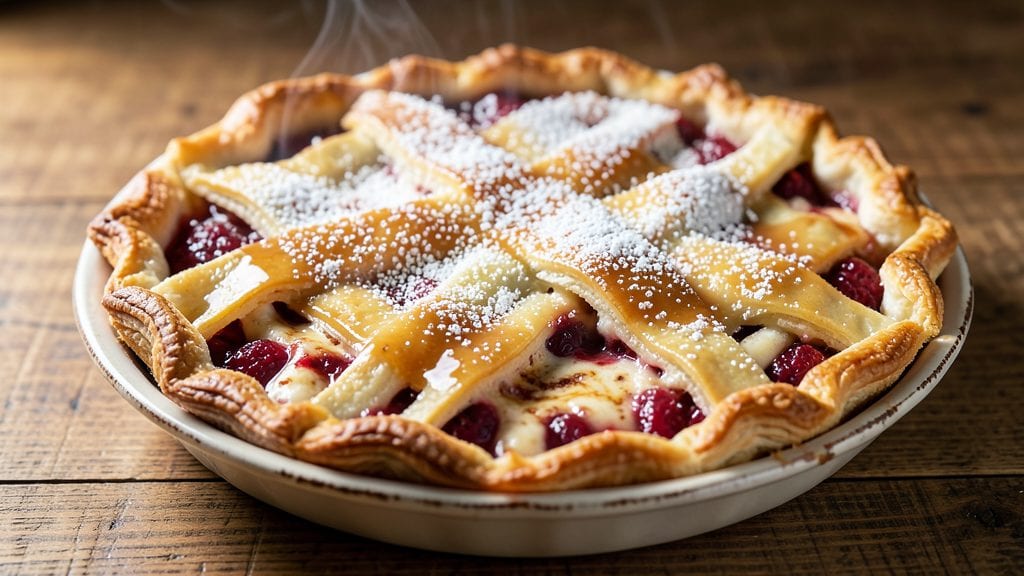
This Nesselrode pie recipe brings a taste of Germany to your kitchen with its elegant layers of spiced fruit filling, delicate custard, and a pressed oat crown that's crispy yet tender.
The secret to its success lies in precise layering and proper chilling—each component must be assembled with care to achieve that signature texture and flavor balance. I first discovered this dessert while researching classic German pastries, and it quickly became a showstopper at holiday gatherings.
The recipe begins with a simple yet sturdy sponge cake base, topped with a rich raspberry preserve that's spiced just enough to complement the sweetness. Between the fruit and the pressed oat crown sits a velvety custard layer, its smoothness contrasting beautifully with the crispy oat topping.
What makes this pie truly special is how the flavors meld together after chilling—each bite delivers a harmonious blend of tangy fruit, creamy custard, and buttery oat crunch.
Baking requires patience, especially the chilling steps between layers, which ensure the pie holds its shape and delivers that perfect texture. The pressed oat crown, made from oats and butter, develops a golden, crisp exterior while staying soft inside—a detail that often surprises first-time bakers.
Once assembled, the pie needs time to set in the refrigerator, allowing the flavors to fully develop and the layers to achieve their signature structure.
Serve this pie at room temperature, garnished with a light dusting of powdered sugar or fresh berries for a touch of elegance. It's ideal for special occasions, holiday celebrations, or when you want to impress guests with a dessert that feels both rustic and refined.
The key to success is attention to detail—every layer matters, and the result is worth the effort.
Ingredients for nesselrode pie
Eighteen ingredients, three layers—each plays a crucial role in this German masterpiece.
| Ingredient | Amount | Notes |
|---|---|---|
| All-Purpose Flour 🌾 | 2 ½ cups | Sifted for even texture |
| Granulated Sugar 🍚 | 1 ½ cups | Superfine preferred for smoothness |
| Unsalted Butter 🧈 | 1 cup | Cold, cubed for sponge |
| Large Eggs 🥚 | 4 whole | Room temperature for blending |
| Raspberry Preserve 🍓 | 1 ½ cups | High-quality, unsweetened |
| Ground Cinnamon 🌿 | 1 tsp | Freshly ground for warmth |
| Ground Nutmeg 🌿 | ½ tsp | Freshly grated preferred |
| Powdered Sugar 🍚 | ½ cup | For custard layer |
| Heavy Cream 🥛 | 1 ½ cups | Cold for custard |
| Vanilla Extract 🌸 | 1 tbsp | Pure, high-quality |
| Old-Fashioned Rolled Oats 🥣 | 2 cups | Not quick oats |
| Light Brown Sugar 🍚 | ½ cup | Packed for crown |
| Salted Butter 🧈 | ½ cup | Cold, cubed for crown |
| Powdered Sugar 🍚 | ¼ cup | For dusting final pie |
| Fresh Raspberries 🍓 | ½ cup | Optional garnish |
The raspberry preserve is the heart of this pie, so quality matters. Look for unsweetened preserves at specialty stores like Whole Foods or Trader Joe's—their organic options often have the best balance of fruit and spice. Fresh raspberries can replace up to half the preserve, but they release moisture, so drain them well. For the rolled oats, avoid quick oats—their texture won't hold up. Bob's Red Mill or Quaker old-fashioned oats work best. The unsalted butter for the sponge must be cold; let it sit at room temperature for 30 minutes before creaming to avoid overmixing. Wegmans or Kroger often carry European-style butter with higher fat content, perfect for this recipe.
No raspberry preserve? Homemade jam works, but reduce sugar to match the preserve's sweetness. Substitute blackberry or apricot preserves for a different flavor twist. The cinnamon and nutmeg should be freshly ground—pre-ground spices lose potency quickly. If you can't find superfine sugar, pulse regular granulated sugar in a food processor for 30 seconds. The heavy cream must be cold for the custard; if it warms, chill the bowl before whipping. For the pressed oat crown, light brown sugar adds moisture and caramelization—don't skip it. Pecan halves can replace half the oats for added texture, but toast them first to enhance flavor.
Store the sponge cake base wrapped in plastic for up to 3 days at room temperature. The custard layer keeps for 2 days in the fridge, but add a thin layer of plastic wrap directly on the surface to prevent a skin from forming. The oat crown mix can be prepped 1 day ahead and stored in an airtight container. Once assembled, the pie needs at least 4 hours in the fridge to set properly. For longer storage, wrap tightly in plastic and freeze for up to 3 months. Let it thaw overnight in the fridge before serving. The powdered sugar garnish should be sifted just before serving to avoid clumps.
Why You'll Love This Recipe
- No-Roll Pastry Trick: I swear by this shortcut—just mix flour, butter, and ice water until it almost comes together, then slap it into the pan. No fuss, no frustration, and the crust still holds like a dream.
- Raspberry Buttercream Magic: That raspberry preserve isn’t just filling—it’s the star. When it melts into the buttery custard layer, you get this tangy-sweet balance that makes every bite feel like dessert (even if you’re calling it breakfast).
- Breakfast or Brunch Hero: Serve it warm with a dusting of powdered sugar for a weekend brunch, or slice it cold for a picnic. Honestly, I’ve even packed it in my kid’s lunchbox—it’s that versatile.
- Budget-Friendly Luxury: Eggs, butter, and flour? Pantry staples. Raspberry preserve is the only splurge, and a small jar goes a long way. Leftovers? Reheat slices in the toaster—crispy edges, creamy center, repeat.
Step-by-step instructions for Nesselrode pie recipe
Follow these precise steps to create a layered German-inspired pie with spiced fruit filling and a crisp oat crown.
Prepare the Spiced Fruit Filling
In a medium saucepan, combine the 1.5 cups raspberry preserve, 1.5 cups granulated sugar, 1 tsp ground cinnamon, and 0.5 tsp ground nutmeg. Warm over medium-low heat for 5-7 minutes, stirring constantly until the sugar dissolves completely and the mixture thickens slightly. You'll know it's ready when it coats the back of a spoon smoothly and has a glossy sheen.
Remove from heat and stir in the 1 tbsp vanilla extract. Let the mixture cool to room temperature before using—this prevents the custard layer from breaking when combined later. If the filling thickens too much while cooling, whisk in 1-2 tablespoons of water to restore a pourable consistency.
Create the Custard Layer
In a separate bowl, whisk together the 4 whole large eggs and 0.5 cup powdered sugar until smooth and slightly thickened. Gradually whisk in the 1.5 cups heavy cream until fully combined. This custard layer forms the creamy base between the fruit filling and the oat crown.
Pour half of the custard mixture into a 9-inch pie dish, spreading it evenly to cover the bottom. Then carefully spoon the cooled raspberry filling over the custard, spreading it to within ½ inch of the edges. Top with the remaining custard, spreading it evenly. The layers should be about ¼ inch thick each for proper baking.
Prepare the Oat Crown
In a food processor, pulse the 2 cups old-fashioned rolled oats until they resemble coarse sand. In a large bowl, combine the oat mixture with the 0.5 cup light brown sugar and 0.5 cup salted butter, cutting the butter into small pieces. Use your fingers to work the butter into the oat mixture until it forms a crumbly dough that holds together when pressed.
Press this dough firmly over the top of the pie, creating a ½-inch thick layer that extends slightly beyond the pie dish edges. Use a fork to create decorative patterns or a simple crisscross design on top. This crown should be compact and solid—if it crumbles, gently press it back into place.
Bake to Golden Perfection
Preheat your oven to 375°F. Bake the pie for 40-45 minutes until the oat crown is deep golden brown and the filling is set but still slightly jiggly in the center. If the edges brown too quickly, loosely cover them with aluminum foil after 20 minutes of baking.
Remove from the oven and let cool completely on a wire rack before slicing. The pie needs time for the layers to fully set—at least 2 hours is ideal. For serving, dust the top with the 0.25 cup powdered sugar and garnish with the 0.5 cup fresh raspberries just before cutting. This pie tastes best at room temperature, allowing the flavors to meld perfectly.
Pro Tips For Making Nesselrode Pie
- Chill the Dough First: Nesselrode pie crusts are notorious for shrinking if you skip this—trust me, I’ve watched it happen. Roll out the dough, wrap it tightly in plastic, and refrigerate for at least 30 minutes before baking. The cold makes it firm enough to hold its shape, so your pie doesn’t turn into a sad, lopsided puddle.
- Use Cold Butter for Layers: That butter in the crust and filling isn’t just flavor—it’s structure. Cut the unsalted butter into tiny cubes (pea-sized, no bigger) and keep it cold while mixing. Warm butter melts too fast, and your crust will end up greasy instead of flaky. If the dough feels sticky, chill it again—no shortcuts here.
- Don’t Overmix the Filling: The raspberry preserve and sugar filling is delicate. Once you fold in the whipped egg whites (or whatever binding agent your recipe uses), stop mixing the second everything’s just combined. Overmixing adds air, and that leads to a dense, heavy pie instead of a light, jiggly center. Think "gentle fold," not "whip it into submission."
- Bake in a Water Bath: This isn’t a custard pie, but the high sugar content in the filling can make it gummy if not baked evenly. Place your pie tin in a larger baking dish, add hot water halfway up the sides, and cover the whole thing loosely with foil. The steam keeps the top from drying out while the bottom bakes through—no more undercooked centers or burnt tops.
Regional styles of this nesselrode pie
German Tradition
This pie originated in 19th-century Germany, where it was traditionally served at holiday gatherings and special occasions.
The name "Nesselrode" comes from the Nesselrode Castle in Hesse, where it was first documented in the 1800s. The original recipe featured raspberry preserves as the star, a nod to Germany's love for tart-sweet fruit combinations.
I love how this dessert bridges rustic German flavors with elegant layering techniques that feel surprisingly modern. 🌟
Swiss Adaptation
In Switzerland, Nesselrode pie often includes almond flour in the oat crown for added texture and nutty depth. Swiss bakers also frequently use white chocolate shavings between layers instead of vanilla extract. The custard layer sometimes incorporates a splash of rum or kirsch for warmth.
I've experimented with this version and found it pairs beautifully with Swiss meringue on top for a lighter finish. 🍫
Nordic Variations
Scandinavian countries like Denmark and Sweden often replace raspberry preserves with lingonberry jam, which adds a bright, tart contrast. The pressed oat crown may include cardamom alongside cinnamon, reflecting Nordic spice traditions.
In Finland, some versions use cloudberry preserves for a floral, honey-like sweetness. I recommend trying the lingonberry version if you want a more tart, vibrant twist. 🍓
Austrian Twist
Austrian bakers frequently add chopped apricots or plums to the fruit layer alongside raspberries, creating a jammy, fruit-forward center. The custard often includes a touch of lemon zest for brightness.
Some Austrian recipes even wrap the entire pie in puff pastry before baking for a flaky crust. This version feels more decadent while keeping the pie's signature layers intact. 🥧
Modern American Updates
In the US, many home bakers swap traditional preserves for homemade fruit compotes made with seasonal berries. Some versions use coconut milk instead of heavy cream in the custard for a dairy-free option.
I've seen creative takes using matcha powder in the custard or espresso-infused raspberry filling for a sophisticated twist. These updates keep the pie's essence while making it more approachable for contemporary palates. ☕
British Layering
British adaptations often include a layer of sponge cake between the custard and fruit filling, inspired by Victoria sponge cake traditions. The oat crown may be replaced with crushed meringue or shortbread crumbs for extra crunch.
Some British recipes also add a splash of sherry to the custard. This version feels lighter and more delicate, perfect for afternoon tea settings. 🍮
Nutrition facts
Frequently asked questions
Can I make this pie without raspberry preserves?
Swap the raspberry preserves for blackberry jam, apricot preserves, or even homemade fruit compote made from seasonal berries. For a tart twist, Nordic versions use lingonberry jam—just adjust the sugar in the spiced mixture to balance the flavor. The key is using a thick, fruit-forward filling that holds its shape between layers.
Why does the oat crown need to be pressed so firmly?
The pressed oat crown creates the signature crispy-yet-tender texture that sets this pie apart. Pressing it firmly ensures even baking and prevents crumbling during slicing. For extra stability, chill the pie for 30 minutes after pressing before baking. If the crown still crumbles, sprinkle a little extra powdered sugar between layers to bind the oats.
How long should I chill the pie before serving?
Chilling is critical for texture and flavor development. Let the pie rest in the refrigerator for at least 4 hours, but overnight is ideal. This allows the custard to fully set, the fruit filling to meld with the spice, and the oat crown to crisp up properly. Serving it at room temperature after chilling ensures the perfect balance of creamy and crunchy layers.
Can I prepare any components ahead of time?
Yes! The sponge cake base keeps for 3 days wrapped at room temperature, and the oat crown mix can be prepped 1 day ahead in an airtight container. The custard layer should be made fresh but can be refrigerated for 2 days with plastic wrap pressed directly on the surface. Assemble the pie just before baking for the best texture.
What’s the secret to avoiding a soggy bottom?
Prevent sogginess by ensuring each layer is fully cooled before adding the next. Spread the custard evenly and leave a ½-inch border at the edges. For extra insurance, blind-bake the sponge base for 5 minutes at 350°F before adding the custard. If the custard seems too runny, whisk in 1 tablespoon cornstarch to thicken it slightly.