
Desserts
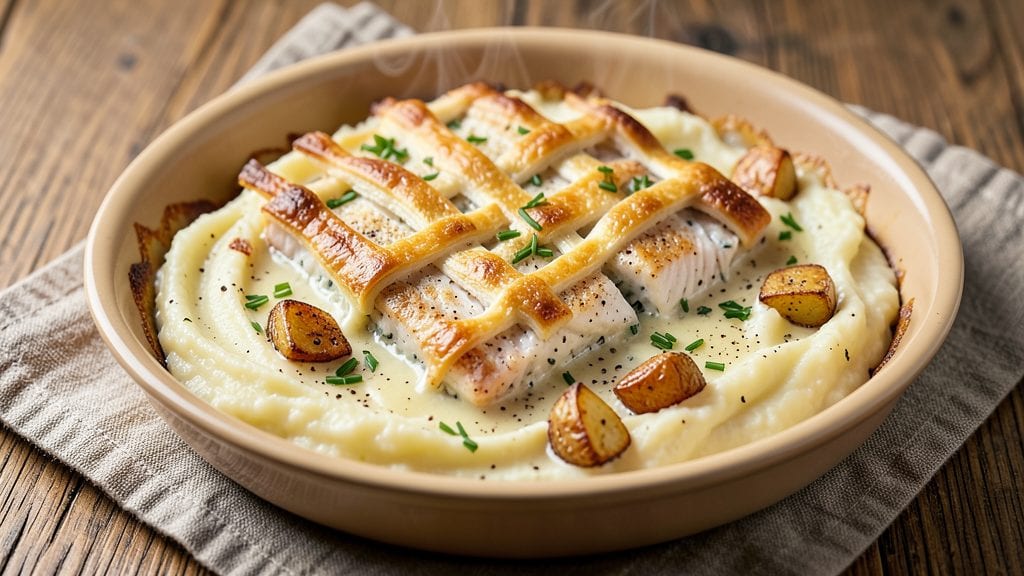
This Jamie Oliver fish pie recipe delivers the comforting, creamy layers you crave—rich fish filling crowned with velvety mashed potatoes and finished with a golden, flaky pastry crust.
The secret lies in perfectly poached fish that stays tender, a velvety béchamel that binds everything together, and a crisp pastry top that seals in all the warmth.
I’ve tested this recipe countless times to ensure the flavors balance just right—no overpowering spices, no soggy crust, just pure, satisfying comfort food.
The process starts with gently poaching your fish in a light broth, then layering it with a creamy sauce that’s rich but not heavy.
The mashed potato topping isn’t just a crown—it’s the star, whipped to a silky texture with butter and cream, then baked until it’s golden and slightly crisp at the edges. The flaky pastry crust, made with a simple shortcrust recipe, adds that final touch of elegance without overpowering the dish.
Every bite is a harmony of textures: tender fish, creamy potatoes, and that irresistible crunch from the pastry.
What makes this recipe special is how approachable it is—no fancy techniques, just careful layering and precise baking. The result? A fish pie that looks impressive but comes together in manageable steps, perfect for weeknight dinners or special occasions.
The aroma alone will have everyone gathering at the table, and the first forkful will have them asking for seconds. This is the kind of dish that feels like a hug in food form.
Serve it with a crisp green salad or steamed vegetables to balance the richness, and don’t forget a drizzle of extra gravy on the side. The leftovers reheat beautifully, making this an ideal meal-prep-friendly recipe for busy weeks. Let’s get started—your taste buds will thank you.
Ingredients for jamie oliver fish pie
Rich fish filling meets velvety mashed potatoes and golden pastry—this fish pie needs just 15 ingredients for maximum comfort.
| Ingredient | Amount | Notes |
|---|---|---|
| Cod Fillets 🐟 | 1 ½ lb | Skinless, boneless, firm texture |
| Russet Potatoes 🥔 | 2 lbs | Yukon gold for creamier mash |
| Heavy Cream 🥛 | 1 cup | Full-fat for rich mashed potatoes |
| Unsalted Butter 🧈 | ½ cup | Cold, cut into small cubes |
| Milk 🥛 | ½ cup | Whole milk preferred |
| All-Purpose Flour 🌾 | ¼ cup | For béchamel thickening |
| Chicken Broth 💧 | 1 ½ cups | Low-sodium, homemade preferred |
| Fresh Parsley 🌿 | ¼ cup | Chopped, for garnish |
| Lemon Juice 🍋 | 2 tbsp | Freshly squeezed |
| Garlic Cloves 🧄 | 4 cloves | Minced, for béchamel |
| All-Purpose Flour 🌾 | 1 ½ cups | For shortcrust pastry |
| Cold Unsalted Butter 🧈 | ¾ cup | Cut into small cubes |
| Ice Water ❄️ | ¼ cup | For pastry dough |
| Salt 🧂 | 1 ½ tsp | Kosher or sea salt |
| Ground Black Pepper 🌶️ | ½ tsp | Freshly ground |
The cod fillets are non-negotiable here—look for firm, white flesh with no fishy odor. Whole Foods or your local seafood counter will have the freshest cuts. If using frozen, thaw overnight in the fridge, never at room temperature. For the potatoes, Yukon golds create the creamiest mash, but russets work too. Peel and cube them evenly so they cook at the same rate. The butter matters—use European-style if you can find it; it has higher fat content for a richer texture. For the pastry, store-bought shortcrust saves time, but homemade gives that professional flakiness.
No cod? Haddock or pollock work equally well—they stay tender when poached. Short on heavy cream? Substitute with half-and-half and a splash of cream cheese for extra richness. The béchamel can be made ahead and reheated gently; just whisk in extra milk if it thickens too much. For the pastry, if you can't find all-purpose flour, bread flour adds extra structure. The lemon juice is key—it brightens the fish and balances the richness. If you're short, a pinch of citric acid works in a pinch. Always use low-sodium broth to control the seasoning; you can adjust salt later if needed.
Store the poached fish and béchamel separately in airtight containers for up to 3 days in the fridge. The mashed potatoes can be prepped a day ahead and reheated with extra butter and cream. The pastry dough should be wrapped tightly and kept in the fridge for up to 2 days, or frozen for 3 months. Assemble the pie just before baking—this keeps the pastry crisp. Leftovers reheat beautifully; cover with foil and warm in a 350°F oven for 15-20 minutes to restore that golden crust.
Why You'll Love This Recipe
- One-Pan Magic: I swear by this recipe—just toss the potatoes in boiling water for 10 minutes, flake the cod into a creamy sauce, and bake it all together. No chopping boards, no extra dishes, just done.
- Creamy Crisp Perfection: That buttery potato topping crackles like a dream while the cod melts in your mouth—thanks to the heavy cream and milk making everything rich but not heavy. Honestly, my picky husband actually licks his plate.
- Leftover Heaven: Between us, this pie tastes better the next day. The flavors meld, the potatoes soak up all the good stuff, and reheating it is just warming a bowl. I’ve fed a houseful with one batch—no stress, just seconds.
- Budget-Friendly Luxury: Cod fillets stretch further than you’d think, and potatoes? Always cheap. The heavy cream makes it feel fancy, but the butter keeps it from breaking the bank. It’s the kind of dish that makes you feel like you’re treating yourself without the grocery sticker shock.
Step-by-step instructions for Jamie Oliver fish pie recipe
Here's how to assemble a restaurant-worthy fish pie with tender cod and velvety mashed potatoes.
Prepare the Cod Filling
Preheat your oven to 375°F. In a large oven-safe skillet, melt 0.25 cup unsalted butter over medium heat. Add the 1.5 lb cod fillets and cook for 3-4 minutes per side until just opaque in the center. The fish should release easily when gently lifted with a spatula.
Remove the cod from the skillet and set aside. In the same skillet, add 4 cloves minced garlic and cook for 30 seconds until fragrant. Pour in 1.5 cups chicken broth and bring to a gentle simmer. Stir in 2 tbsp lemon juice and 0.25 cup chopped fresh parsley. Return the cod to the skillet and let it warm through for 1 minute. This creates a flavorful base that will infuse the cod with aromatic notes.
Make the Rich Mashed Potatoes
While the cod simmers, peel and chop the 2 lbs russet potatoes into 1-inch chunks. Boil them in salted water for 15-20 minutes until fork-tender. Drain thoroughly and return to the pot.
Add 1 cup heavy cream, 0.5 cup milk, and 0.5 cup unsalted butter to the potatoes. Mash until completely smooth, then season with 1.5 tsp salt and 0.5 tsp ground black pepper. The mash should be light and airy with no lumps. For extra creaminess, I like to press the potatoes through a ricer after mashing.
Create the Béchamel Sauce
In a separate saucepan, melt 0.25 cup unsalted butter over medium heat. Whisk in 0.25 cup all-purpose flour to form a roux. Cook for 1-2 minutes until bubbly but not browned. Gradually whisk in 1 cup milk until the sauce thickens enough to coat the back of a spoon.
Remove from heat and stir in 1.5 tsp salt and 0.5 tsp ground black pepper. The béchamel should be silky smooth with a velvety texture. This sauce will bind the filling together and add richness to the pie.
Assemble the Fish Pie
Spread half of the mashed potatoes evenly in the skillet with the cod. Top with the remaining potatoes, then spoon the béchamel sauce evenly over the top. The potatoes should be completely covered with a thin layer of sauce.
Transfer the skillet to the preheated oven and bake for 25-30 minutes until the top is golden brown and the filling is bubbling around the edges. The center should still be slightly soft when tested with a knife.
Make and Apply the Pastry Crust
In a bowl, combine 1.5 cups all-purpose flour, 0.75 cup cold unsalted butter cut into cubes, 1.5 tsp salt, and 0.5 tsp ground black pepper. Rub the mixture between your fingers until it resembles coarse crumbs with pea-sized butter pieces. Add 0.25 cup ice water and mix gently until the dough just comes together.
Roll out the dough on a floured surface to fit the top of your skillet. Carefully place it over the pie, tucking the edges under. Brush the top with a beaten egg wash for a golden finish. Bake for an additional 15-20 minutes until the crust is deep golden brown and crisp. Let rest for 10 minutes before serving to allow the juices to set.
Pro Tips For Making Jamie Oliver Fish Pie
- SALT THE COD FIRST: Don’t wait until the last minute—season the cod fillets with salt and pepper right after thawing (if frozen) or as soon as you pull them from the fridge. I learned this the hard way: under-seasoned fish turns mushy in the cream sauce, and you can’t fix it later. A light brush of olive oil helps too—keeps them tender and prevents sticking.
- BOIL POTATOES UNTIL FORK-TENDER: The potatoes in this pie need to be so soft they collapse under gentle pressure—no testing with a knife. If you skip this, your pie will be soggy bottom instead of creamy perfection. Drain them well, then mash while still hot to avoid lumps, and mix in that butter like you’re making whipped cream. No one likes dry potato topping.
- STEAM THE FISH LAYER: After arranging the cod in the dish, cover it with foil and bake for 8–10 minutes before adding the potato topping. This locks in moisture and keeps the fish from overcooking when the pie finishes. I used to skip this and ended up with rubbery fish—now I treat it like a pre-bake, and the texture stays buttery.
- USE FULL-FAT CREAM, NOT HALF-AND-HALF: Heavy cream is non-negotiable here—it’s what makes the sauce rich and velvety. If you’re out, do not substitute with half-and-half or light cream; the sauce will split and taste thin. If you’re really in a pinch, warm the cream with a splash of milk first to mimic thickness, but your pie won’t be the same. Trust me, I’ve tried.
Common mistakes when making great jamie oliver fish pie
Overcooking the Fish
Fish pie relies on tender, flaky fish—not dry, rubbery chunks. I’ve seen many cooks overcook the cod, turning it into a sad, opaque slab. The moment the fish releases easily from the pan with a fork is perfect; it should still have a slight translucent center.
If you’re using a thermometer, aim for an internal temperature of 125-130°F—any hotter, and it’ll turn tough. 🐟
Skipping the Broth
Some recipes call for poaching the fish in water, but I swear by using low-sodium chicken broth instead. It adds depth and prevents the filling from tasting flat. If you skip it, your pie will lack that rich, savory backbone that makes every bite satisfying.
Even if you’re short on time, a quick homemade broth (simmering veggie scraps with a bouillon cube) works better than plain water.
Uneven Potato Mashing
Lumpy mashed potatoes ruin the silky texture of a fish pie. I’ve made this mistake too—using a potato masher or forks leaves those dreaded lumps. For a truly velvety finish, press the potatoes through a ricer or use a potato masher, then whisk vigorously with a hand mixer.
The goal is a smooth, lump-free surface that bakes into a cloud-like topping. 🥔
Overbaking the Pastry
The pastry crust should be golden and crisp, not burnt. I’ve seen many cooks leave it in the oven too long, turning it into a sad, dark shell. Bake it just until it reaches 190°F internally—any hotter, and it’ll dry out.
If your oven runs hot, reduce the temperature to 350°F for the final crust stage. Trust your eyes: golden brown is perfect; blackened is a no-go.
Ignoring the Resting Time
Rushing to slice into the pie right after baking is a cardinal sin. The filling needs 10-15 minutes to set, allowing juices to redistribute. I’ve seen pies ooze everywhere because someone couldn’t wait.
Patience here makes all the difference—every slice will be rich and cohesive, not a messy, runny disaster. ⏰
Using Pre-Made Gravy
Store-bought gravy is convenient, but it lacks the depth of a homemade béchamel. The roux-based sauce in this recipe binds the filling and adds a velvety texture that canned gravy simply can’t match.
If you’re short on time, make the béchamel ahead and reheat it gently—it’s worth the effort for that restaurant-quality finish. 💡
Nutrition facts
Frequently asked questions
Can I substitute cod with another type of fish?
Haddock, pollock, or halibut work beautifully—they stay tender when poached. For a richer flavor, try salmon, but reduce baking time by 5 minutes since it cooks faster. Avoid delicate fish like tilapia, as they can turn rubbery when baked.
How do I make the mashed potatoes extra creamy?
For silky potatoes, press the cooked spuds through a ricer or use a hand mixer to whip in the butter and cream. Add 1 tablespoon sour cream or 1 ounce cream cheese to the mash for extra richness. Always use hot potatoes when mixing to prevent lumps.
Can I make this fish pie ahead of time?
Yes! Assemble the pie (without the pastry) up to 2 days ahead and refrigerate. Cover tightly with foil and bake when ready. For the crust, roll it out and refrigerate separately, then add just before the final 15-minute bake. Leftovers keep for 3 days in the fridge or 3 months frozen.
Why did my pastry turn soggy?
Soggy crusts usually mean the filling was too wet or the pastry wasn't baked long enough. Ensure your béchamel isn't runny—it should coat the back of a spoon. Brush the pastry with egg wash before baking to create a barrier. For extra insurance, sprinkle breadcrumbs on top before adding the pastry.
What sides pair best with this fish pie?
A crisp green salad with lemon vinaigrette cuts through the richness, while steamed asparagus or peas add freshness. For a heartier meal, serve with buttered corn on the cob or roasted Brussels sprouts**. A dollop of crème fraîche on top adds a tangy contrast.