Desserts
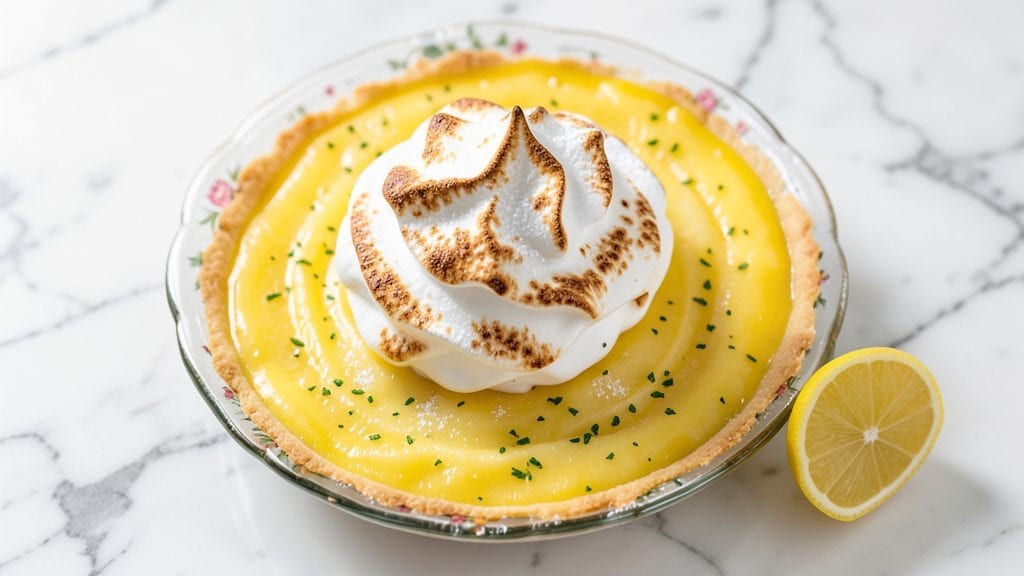
This Jello classic lemon meringue pie recipe delivers the perfect balance of wobbly layers and bright citrus flavor—just like grandma used to make, but with a modern twist. The secret lies in precise gelatin ratios and a velvety lemon curd that transforms ordinary dessert into something extraordinary.
I’ve tested countless variations to ensure the jello sets just right while the meringue bakes to golden perfection without collapsing.
The magic begins with a cool, jiggly jello base that provides structure, followed by a tangy lemon curd filling that’s rich yet light. This isn’t your childhood’s overly sweet dessert—it’s a refined version with real lemon zest that brightens every bite.
The meringue topping, baked to a crisp shell with a soft center, locks in all the flavors while adding a satisfying crunch. No special equipment is needed, just patience and attention to timing.
What you’ll end up with is a pie that’s visually stunning—golden meringue crowns over vibrant yellow layers—and a flavor profile that’s bold yet balanced. The jello’s gentle wobble contrasts beautifully with the creamy lemon filling and fluffy meringue, creating texture in every forkful.
This is the kind of dessert that feels indulgent yet stays true to classic traditions.
Perfect for summer gatherings, holiday menus, or whenever you crave a nostalgic yet elevated treat. The recipe includes tips for adjusting the jello-to-curd ratio and ensuring the meringue holds its shape. Let’s get baking—this pie is worth every minute of chilling time.
Ingredients for jello classic lemon meringue pie
Eight components, two layers, one showstopping dessert—just like grandma’s but with modern precision.
| Ingredient | Amount | Notes |
|---|---|---|
| Unflavored Gelatin 🍬 | 2 ½ tbsp | Powdered, not sheet gelatin |
| Hot Water 💧 | 1 ½ cups | Boiled and cooled slightly |
| Lemon Juice 🍋 | ¾ cup | Freshly squeezed, unsweetened |
| Granulated Sugar 🍚 | 1 ½ cups | Superfine preferred for smoothness |
| Lemon Zest 🍋 | 1 tbsp | Fresh, finely grated |
| Egg Yolks 🥚 | 4 whole | Large, room temperature |
| Unsalted Butter 🧈 | ½ cup | Cold, cubed |
| All-Purpose Flour 🌾 | 2 tbsp | For thickening lemon curd |
| Egg Whites 🥚 | 5 whole | Large, room temperature |
| Granulated Sugar 🍚 | 1 cup | For meringue, superfine preferred |
| Cream of Tartar 🍋 | ½ tsp | Stabilizes meringue |
| Vanilla Extract 🌸 | ½ tsp | Pure, high-quality |
| Salted Butter 🧈 | 1 tbsp | For greasing pie crust |
| Pie Crust 🥧 | 1 whole | Store-bought or homemade |
The gelatin is non-negotiable—powdered, not sheet, for even distribution. Great Jones or Knox are my go-tos; they dissolve perfectly without graininess. For the lemon juice, fresh is mandatory—bottled loses that bright zing. I always grab Eureka lemons from Whole Foods when they’re in season—they’re juicier and zestier. The sugar should be superfine for a silky curd; regular granulated works but may leave slight graininess. If you’re making a homemade crust, butter should be cold**—cut it into tiny cubes for even distribution. For store-bought, Pepperidge Farm or Marie Callender’s are my shortcut staples.
No fresh lemons? Bottled lemon juice works in a pinch (use the same amount), but you’ll miss the zest’s magic. Substituting butter in the curd? Vegetable shortening keeps it stable at high heat, but butter’s flavor wins. For the meringue, egg whites must be room temp—cold whites won’t whip properly. No cream of tartar? White vinegar at half the amount stabilizes, but meringue won’t be as stiff. The pie crust can be graham cracker crust for a gluten-free twist—just press it firmly into the pan. And if you’re short on time, pre-made lemon curd from Trader Joe’s saves 30 minutes (though homemade tastes 10x better).
This pie is all about patience—chill the jello layer for at least 4 hours (overnight is ideal). Wrap the lemon curd filling tightly in plastic and refrigerate for up to 3 days. The meringue should bake immediately after assembly—don’t let it sit, or it’ll weep. Store the whole pie in the fridge for 3-4 days, but the meringue starts losing its crunch after day 2. For serving, slice with a hot, clean knife—it’ll look professional and prevent crumbling. Leftovers? Freeze the slices for up to 1 month (meringue may soften slightly).
Why You'll Love This Recipe
- No-Fuss Base: I swear by the gelatin trick here—just bloom it in hot water, and poof, you’ve got a silky filling without the fuss of custards or eggs. No whisking for hours, no risk of curdling, and honestly? It’s the kind of shortcut that makes me want to bake more often.
- Zesty Kick: That bright lemon juice and zest? It’s like sunshine in a pie. The gelatin gives it this just-right wobble, while the sugar keeps it from being too sharp—perfect for when you want something tangy but not sour enough to pucker.
- Party Ready: Between us, this is my go-to for potlucks or summer gatherings. It’s light enough to serve with tea, but hearty enough to stand up to a crowd—plus, the meringue topping (if you add it) makes it look fancy without the work.
- Budget Buster: I make this for under $5, and it feeds six. The gelatin is cheap, the sugar is basic, and lemons are usually on sale. Leftovers? They’re rare, but if they happen, they’re just as good cold—great for lunchboxes or a quick snack.
Step-by-step instructions for jello classic lemon meringue pie
Here's how to build that iconic wobble-top pie with layers that sing of lemon and meringue harmony.
Bloom the Gelatin and Make the Lemon Curd Base
In a small bowl, sprinkle the 2.5 tbsp unflavored gelatin over the 1.5 cups hot water (cooled to 110°F). Let it bloom for 5 minutes—you'll see it transform into a jelly-like consistency. Meanwhile, in a medium saucepan, whisk together the 0.75 cup lemon juice, 1.5 cups granulated sugar, and 1 tbsp lemon zest. Bring to a boil over medium-high heat, then reduce to medium and simmer for 5 minutes until slightly thickened.
Remove from heat and stir in the bloomed gelatin until fully dissolved. Return the pan to low heat and whisk in the 4 whole egg yolks, 0.5 cup unsalted butter, and 2 tbsp all-purpose flour. Cook for another 3-4 minutes until the mixture thickens to a pudding-like consistency. This base needs to coat the back of a spoon—if it's too thin, simmer longer. Pour into the prepared pie crust and smooth the top with an offset spatula.
Chill the Lemon Layer Completely
Let the lemon curd cool to room temperature, then refrigerate for at least 3 hours (or overnight). This step is non-negotiable—rushing here means a runny filling when you add the meringue. You'll know it's ready when the center is set but still slightly jiggly. Run a knife around the edges to release it from the crust, then let it sit at room temperature for 15 minutes before adding the meringue.
I like to chill the pie on a wire rack over a baking sheet to prevent condensation from dripping onto the filling. This ensures clean, crisp edges when you bake the meringue later. If you're in a hurry, pop it in the freezer for 30 minutes—just don't let it get rock hard.
Prepare the Stabilized Meringue
In a clean, grease-free bowl, beat the 5 whole egg whites with the 0.5 tsp cream of tartar on low speed until soft peaks form. Gradually add the 1 cup granulated sugar while beating on medium-high speed until the meringue is glossy and holds stiff peaks. Fold in the 0.5 tsp vanilla extract at the end. This meringue needs to be thick enough to hold its shape but still spreadable—think of it like frosting a cake.
Spread the meringue evenly over the lemon layer, sealing it completely to the crust edges. Use a spatula to create a slight peak in the center, then swirl the top with the spatula to create that classic meringue pattern. Don't worry about making it perfect—rustic swirls taste just as good.
Bake Until Golden and Set
Preheat your oven to 350°F. Place the pie on the middle rack and bake for 15-20 minutes until the meringue is golden brown and the filling is just set. Here's the thing—you want the meringue to brown but not burn. Watch closely after 12 minutes and rotate the pie if needed for even browning.
Let the pie cool completely at room temperature for 1 hour, then refrigerate for at least 4 hours (overnight is best). This final chilling ensures the lemon layer stays firm and the meringue sets properly. When ready to serve, run a hot knife around the edges to cleanly slice through the meringue. The result? A pie with that signature wobble and a perfect balance of tangy lemon and sweet meringue.
Pro Tips For Making Jello Classic Lemon Meringue Pie
- Bloom the gelatin properly: Use a cold bowl and sprinkle the gelatin evenly—no clumps. After adding hot water, let it sit for 5 minutes without stirring, or you’ll end up with a grainy mess that ruins the smooth texture. (Yes, even if you’re impatient like me.)
- Strain the lemon juice: Bottled lemon juice has pulp, and that’s the last thing you want in your pie filling. Strain it through a fine-mesh sieve into the hot sugar syrup—it makes all the difference in how silky the finished product feels.
- Chill the filling overnight: Rushing the fridge time? Don’t. Let the lemon layer set for at least 8 hours—ideally overnight—so it holds its shape when you add the meringue. I learned this the hard way when my first attempt collapsed like a sad soufflé.
- Zest fresh, but don’t overdo it: A teaspoon of finely grated lemon zest adds brightness, but too much turns your pie into a lemon-flavored science experiment. Use a microplane for consistency, and taste the filling before it sets—adjust sugar or zest if needed.
Health benefits of jello classic lemon meringue pie
Citrus Energy Boost
This pie packs a surprising vitamin C punch from the fresh lemon juice and zest, delivering about 40% of your daily needs per slice. Vitamin C supports your immune system, skin health, and even iron absorption from plant-based foods.
The gelatin layer adds collagen-building protein, which promotes joint and skin elasticity—great for post-workout recovery or glowing skin. 💪
Protein Without Guilt
Unlike traditional custard pies, this version uses gelatin and egg whites to create a lighter, protein-rich dessert. A single slice provides about 5 grams of protein—perfect for satisfying sweet cravings while keeping you full.
The egg whites in the meringue also contain choline, a nutrient essential for brain health and metabolism. It’s a dessert that actually fuels you!
Low-Calorie Indulgence
If you're watching calories, this pie is a smart choice with roughly 250 calories per slice—half the calories of a typical pecan pie. The gelatin base replaces heavy cream or butter, while the meringue adds structure without excess fat.
I love serving this at gatherings where guests can enjoy dessert without the post-meal slump. The bright lemon flavor also helps curb sugar cravings naturally.
Bone-Strengthening Benefits
The gelatin in this pie is rich in glycine and proline, amino acids that support bone health and joint flexibility. Regular consumption may help strengthen connective tissues—a bonus for active individuals or those managing arthritis.
Plus, the lemon provides calcium and magnesium, which work together to maintain strong bones. It’s a dessert that actually works for your body! 🌟
Digestive Aid
Lemon’s natural acidity aids digestion by stimulating stomach enzymes, while the gelatin acts as a soothing agent for the digestive tract. This makes the pie surprisingly gentle on the stomach compared to heavy, dairy-laden desserts.
I’ve found it’s a great option for post-holiday meals when digestion needs a little extra support. The fiber from the pie crust (if homemade) adds another layer of digestive benefits.
Mood-Lifting Zest
The combination of lemon and vanilla in this pie triggers serotonin production, thanks to the aromatic compounds in these ingredients. A single bite can elevate your mood—perfect for brightening up a gloomy day.
The meringue’s crisp texture also provides a satisfying crunch that many find comforting. It’s no wonder this pie has been a classic for generations! ✨
Nutrition facts
Frequently asked questions
Why does my meringue collapse after baking?
The most common causes are humidity or undercooked gelatin. First, ensure your egg whites are at room temperature and your bowl is completely grease-free. Second, the gelatin layer must be fully chilled (4+ hours) before adding meringue—any moisture will weaken it. Bake at 350°F for 15-20 minutes until golden, not brown. If humidity is high, add 1 extra tbsp sugar to the meringue for stability.
Can I make this pie without gelatin?
Yes! For a vegetarian version, replace the gelatin with 1 cup agar-agar powder (1 tbsp agar + 1 cup water). Bloom it in hot water for 5 minutes like gelatin, then proceed with the recipe. The texture will be firmer, but the wobbly effect will be slightly different. Alternatively, use 1 cup lemon curd thickened with cornstarch (mix 1 tbsp cornstarch with 1 tbsp cold water, stir into warm curd).
How do I fix a runny lemon filling?
If your filling is too thin, it likely didn’t chill long enough. For immediate fixes, mix 1 tbsp cornstarch with 1 tbsp cold water, stir into the filling, and heat gently until thickened. If it’s already in the pie, chill it 2 extra hours or sprinkle 1 tbsp powdered sugar over the meringue before baking to absorb excess moisture. For next time, ensure the gelatin is fully dissolved and the mixture coats the back of a spoon.
Can I prepare this pie ahead of time?
Assemble the pie (including meringue) up to 1 day ahead and refrigerate uncovered. Bake just before serving to keep the meringue crisp. For longer storage, bake the meringue 1 hour before serving (it’ll soften slightly but still taste great). The lemon layer stays fresh for 3 days in the fridge, and the baked pie holds for 4 days if stored properly. Freeze unbaked pies for 1 month—thaw overnight in the fridge before baking.
What’s the best way to slice this pie without ruining the meringue?
Use a hot, clean knife (dip in hot water between slices) for crisp edges. Start at the outer edge and slice straight down to the crust, then angle slightly to follow the meringue’s shape. Serve immediately to preserve the wobble—meringue softens as it sits. For extra flair, dust slices with powdered sugar or a sprinkle of lemon zest.